
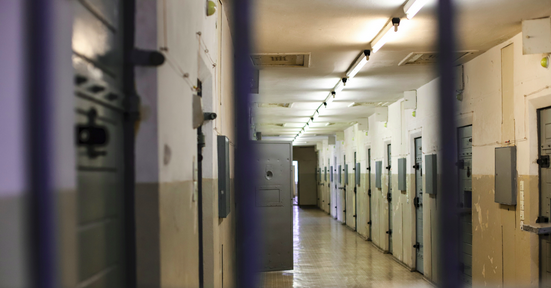

Conditions, control, and duration create pressure.
Stay Informed
Get updates on investigations, detention records, and ongoing filings.
Pretrial Detention Coercion: How Jail Conditions Create Pressure
Pretrial detention coercion occurs when jail conditions shift from holding to pressure. Through isolation, control, and time, detention environments can influence outcomes before conviction.
By LeRoy Nellis
For context, see the systemic detention timeline and live evidentiary record. In addition, legal reference can be found in the U.S. Constitution.
The Hook
They called it holding—not punishment, not a sentence, and not a conviction.
However, that label only matters legally. Inside the facility, it carried no practical meaning.
Instead, time became the defining variable. As detention continued, conditions accumulated. As a result, pressure increased.
The Setting
Williamson County Jail. Pretrial status. No conviction and no sentence imposed.
In theory, that distinction defines the legal boundary. In practice, however, the boundary was not observable.
Rather than functioning as a neutral environment, the facility operated as a mechanism built on repetition and consistency.
How Pretrial Detention Works
Under U.S. law, pretrial detention is not punishment. Instead, its function is limited:
- Ensure court appearance
- Protect public safety
Accordingly, Bell v. Wolfish (1979) establishes that detainees cannot be punished prior to conviction.
In other words, punishment cannot occur directly, indirectly, or through conditions that produce the same effect.
How Pressure Forms
The pretrial detention coercion system does not rely on force. Instead, it relies on structure.
- Compliance-based privileges
- Environmental control
- Conditional access to resources
Individually, these elements appear administrative. However, when repeated over time, they form a system.
More importantly, the pattern—not the individual act—reveals the shift. Once conditions escalate after resistance, they become directional rather than neutral.
Why Duration Matters
The system becomes visible through duration rather than isolated incidents.
Conditions are applied, maintained, and adjusted. Over time, the cumulative effect intensifies.
Therefore, the mechanism is not force—it is continuity.
What Science Shows
- Sleep deprivation reduces decision-making ability
- Chronic stress increases neurological risk
- Isolation produces long-term psychological effects
Because these effects depend on exposure and duration, physical force is not required to produce harm.
Conclusion
This issue is not defined by a single event. Instead, it is defined by a system.
When conditions begin to influence outcomes, detention transitions into leverage.
At that point, it becomes pretrial detention coercion.