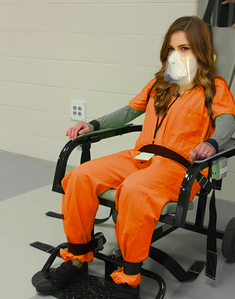

Religious Rights Jail Abuse: Confiscation, Coercion, and the Use of Force Inside Detention
Religious rights jail abuse is not theoretical. Instead, it emerges when a detainee’s belief system is treated as a problem to control rather than a right to respect.
They called it contraband.
I called it sacred.
Prayer cloths. Ritual texts. Personal items tied directly to identity and belief. Inside detention, these objects are more than symbolic—they become stabilizers in an environment designed to strip control away.
Rather than accommodating those beliefs, the response moved in the opposite direction.
It escalated into force.
Incident Overview
Following the refusal to surrender religious materials, the situation escalated quickly. What began as a classification issue turned into a physical control response.
At that point, the detainee was placed into a restraint chair. Because of the positioning, movement and circulation were restricted. As time passed, physical stress increased.
This was not a short stabilization measure. Instead, the duration and conditions suggest something else entirely.
The response appears punitive rather than protective.
In addition, there was no clear attempt to de-escalate the situation through accommodation or alternative resolution.
Although surveillance systems were present and likely captured the incident, access to that footage remains unclear. As a result, questions about transparency and documentation remain unresolved.
Pattern Indicators
Importantly, this incident does not stand alone. Instead, it reflects a broader pattern of behavior:
- Personal property is reclassified as contraband without clear justification
- Refusal to comply leads to escalation instead of mediation
- Control tools, such as restraint chairs, are used in response to non-violent resistance
- Documentation exists but is not readily accessible
When these elements appear together, the issue shifts from an isolated incident to a systemic problem.
Legal Framework and Standards
Multiple legal protections govern religious rights in detention environments. These are not optional—they are baseline requirements.
- First Amendment: Protects the free exercise of religion, even in custody
- RLUIPA: Prohibits substantial burdens on religious practice without a compelling governmental interest
- 42 U.S.C. §1983: Provides a mechanism to pursue civil rights violations under color of law
- Texas Religious Freedom Restoration Act: Reinforces protections at the state level
Because of these standards, institutions are required to accommodate religious practice unless a narrowly tailored justification exists.
When force is used instead, it raises serious compliance concerns under each of these frameworks.
For federal enforcement context, see U.S. Department of Justice Civil Rights Division.
Why This Matters
Religious rights do not disappear at intake. They do not pause during detention. Nor do they depend on compliance.
Instead, they remain protected—especially in environments where individuals have limited control over nearly every aspect of daily life.
When those rights are suppressed through physical force, the issue moves beyond policy.
At that point, it becomes a constitutional issue with broader implications for oversight and accountability.
For additional context, review the systemic timeline and the live evidentiary feed.
About the Author
LeRoy Nellis is an investigative writer based in Austin, Texas, focused on detention systems, institutional accountability, and civil-rights analysis through documented evidence.
You must be logged in to post a comment.