
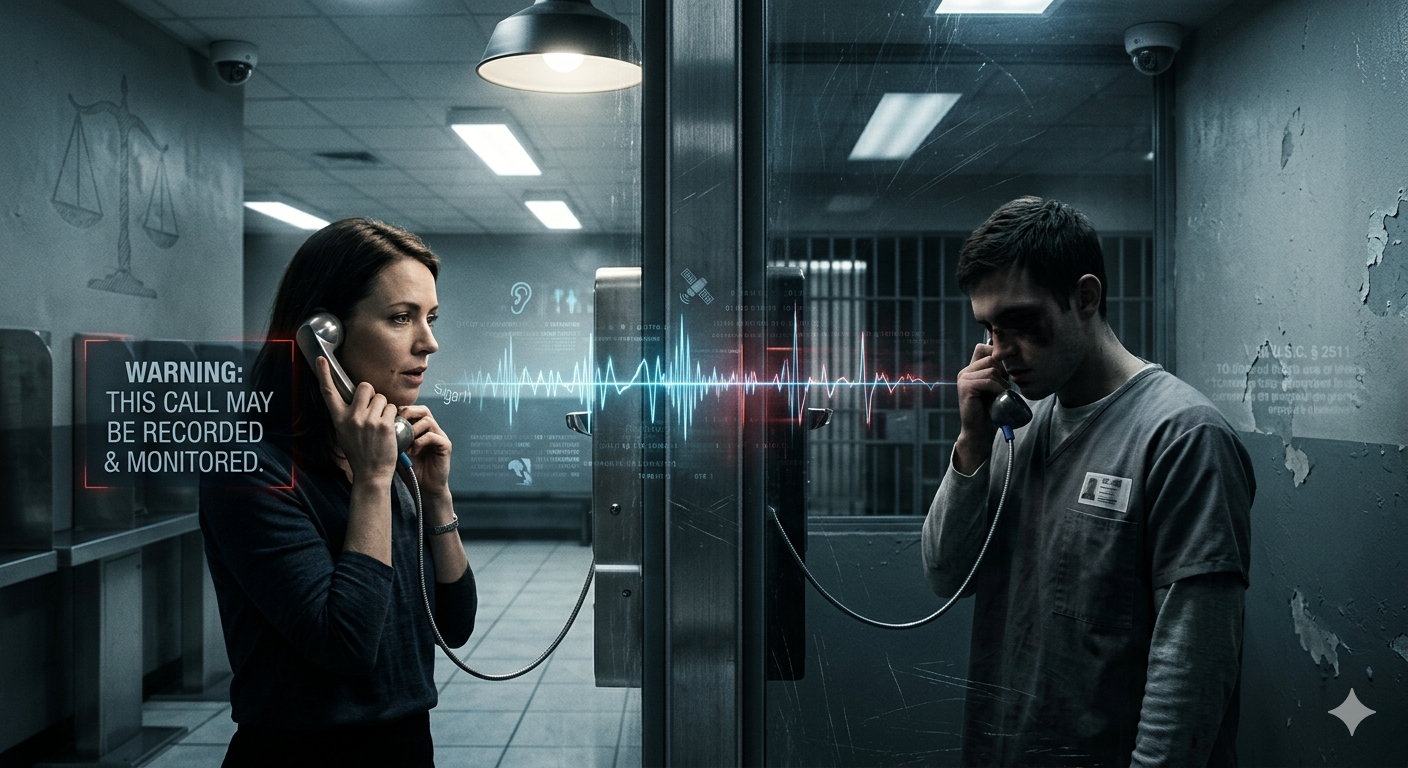
NCIC Jail Phone Surveillance: Consent and Legal Risks

NCIC jail phone surveillance operates at the intersection of detention systems and federal wiretap law, raising critical questions about consent, notification, and constitutional protections within inmate communication systems.
Williamson County Jail • NCIC Phone System • Constitutional Analysis
This analysis examines how inmate phone systems operate within — and potentially stretch — federal wiretap law, raising serious constitutional and due process concerns.
📜 Legal Framework: The Federal Wiretap Act
Under the Federal Wiretap Act (18 U.S.C. § 2511), most communications can be legally recorded with one-party consent. This means if at least one participant is aware of the recording, interception is generally lawful.
- 🔊 Beep tone or recorded announcement
- 🧾 Direct or implied consent
Correctional facilities, however, rely on a different model — “consent by participation.”
NCIC Jail Phone Surveillance — System Breakdown
The NCIC system used in Williamson County Jail illustrates a structural imbalance in how consent is applied.
- Outside Caller: Receives a recorded warning at the beginning of each call
- Inmate: Receives no real-time warning at the start of calls
Instead, inmates rely on intake paperwork, posted signage, and assumed awareness.
Once inside, the system assumes consent indefinitely.
⚠️ Core Issue in NCIC Jail Phone Surveillance
- Outside parties are warned every call
- Inmates are warned once — if at all
This creates asymmetric awareness, where one side is actively informed and the other operates under passive consent.
⚖️ Constitutional Risks
Sixth Amendment — Attorney–Client Privilege
Recorded attorney calls without real-time notice risk compromising privilege and effective assistance of counsel.
Due Process — Fundamental Fairness
Uneven notification creates unequal footing, raising due process concerns.
Regulatory Loophole
Facilities rely on constructive notice rather than real-time transparency.
🧠 Strategic Takeaway
- Consent is assumed, not confirmed
- Notification is uneven
- Legal protections are diluted operationally
Consent obtained without real-time confirmation may not meet federal legal standards.
This supports potential claims involving:
- 📡 Wiretap Act violations
- ⚖️ Sixth Amendment breaches
- 🧾 Due process challenges
📌 Final Word
This isn’t about whether calls can be recorded.
It’s about whether consent is actually happening in real time — or simply assumed.
When systems rely on assumption instead of confirmation, compliance becomes exposure.
The structure of NCIC jail phone surveillance demonstrates how monitoring systems can operate within legal frameworks while still raising significant constitutional concerns.
For broader context, see the Williamson County jail timeline and investigative records.
Legal precedent such as Bell v. Wolfish (1979) outlines limits on punitive detention practices.