
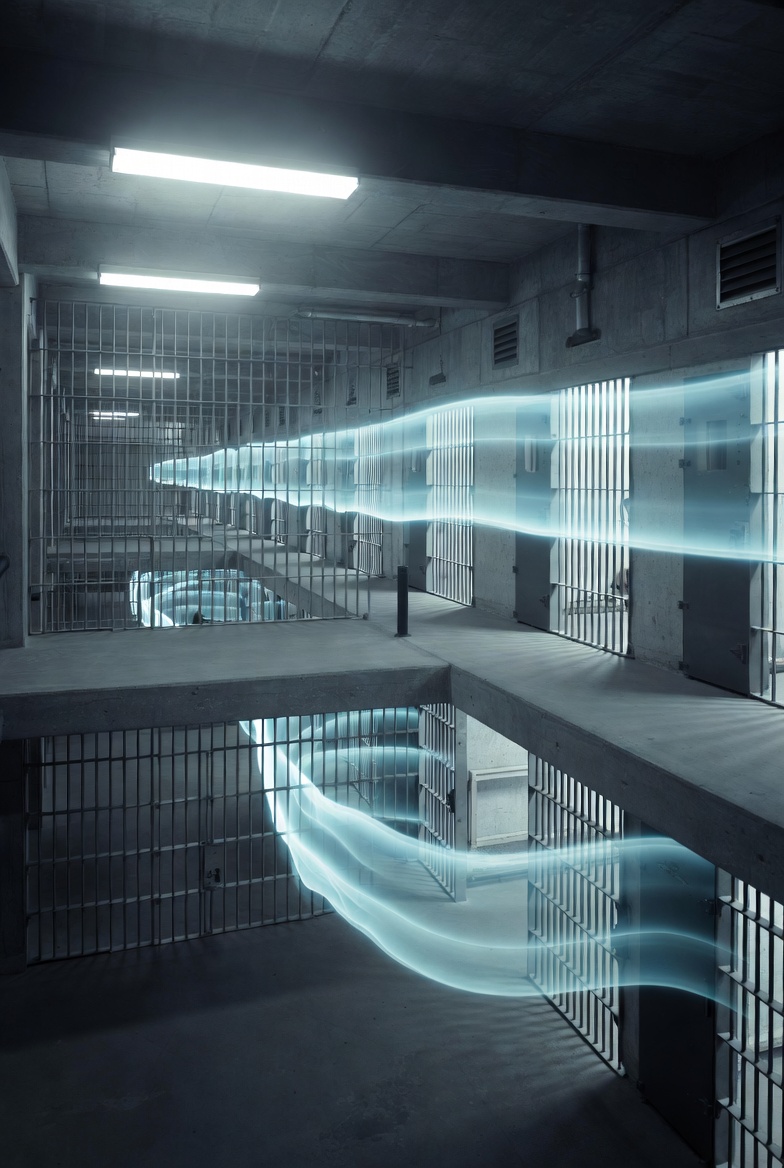
Jail Noise and Vibration Exposure: Environmental Health Risks in Detention Facilities
Jail noise and vibration exposure represent underexamined environmental health risks within detention facilities, affecting both incarcerated populations and correctional staff through continuous acoustic and structural stress.
Keywords: correctional health, environmental justice, occupational safety, jail architecture, acoustic exposure, structural vibration, detention facilities
Abstract
Noise and structural vibration are persistent yet poorly documented environmental exposures within U.S. county jails. While research has focused on overcrowding and sanitation, acoustic conditions remain largely unexamined.
Facilities constructed from concrete and steel amplify reverberation and transmit vibration. Mechanical systems and security infrastructure generate continuous low-frequency noise and high-intensity acoustic shocks.
Evidence from occupational and environmental health research links these conditions to sleep disruption, cardiovascular stress, psychological distress, and fatigue.
This article examines incarceration as a sensory environment shaped by acoustic exposure and structural vibration.
Jail Noise and Vibration Exposure — Introduction
More than 2.3 million individuals are incarcerated in the United States. County jails are high-turnover environments with continuous operational activity.
While attention has focused on sanitation and disease, the sensory conditions of confinement remain underexamined.
Human health is directly affected by noise and vibration, influencing sleep, cognition, and emotional regulation.
Acoustic Amplification in Jail Architecture
- reinforced concrete walls
- steel cell doors
- metal bunks and fixtures
- hard ceilings with minimal acoustic treatment
These materials create environments that amplify sound and structural vibration, functioning as acoustic amplification systems.
Sources of Noise and Vibration
Mechanical Infrastructure
- HVAC systems
- ventilation systems
- plumbing networks
- compressors and pumps
Security Systems
- automated locking systems
- steel doors and gates
- alarm systems
Operational Activity
- verbal communication across units
- movement of metal fixtures
- transport equipment
Combined, these systems create a continuous acoustic load.
Measured Conditions
- Nighttime noise: ~55 dBA
- Peak noise events: ~95 dBA
Hospital guidelines recommend 35–40 dBA for sleep protection.
Health Effects of Acoustic Exposure
Sleep Disruption
Noise above 45 dBA disrupts sleep cycles and cognitive performance.
Cardiovascular Stress
Chronic exposure elevates cortisol levels and blood pressure.
Cognitive and Emotional Effects
- reduced concentration
- increased irritability
- anxiety
- impaired emotional regulation
Environmental Justice Implications
Detention facilities are often located in industrial zones, and incarcerated populations disproportionately come from marginalized communities.
Reform Pathways
- continuous acoustic monitoring
- vibration measurement systems
- architectural mitigation strategies
- regulatory exposure standards
Conclusion
Noise and structural vibration represent overlooked environmental hazards in detention facilities.
Reframing incarceration as environmental exposure shifts the conversation from containment to accountability.
For additional context, see the Williamson County investigative timeline.
Environmental exposure standards can be reviewed through OSHA noise exposure guidelines.