

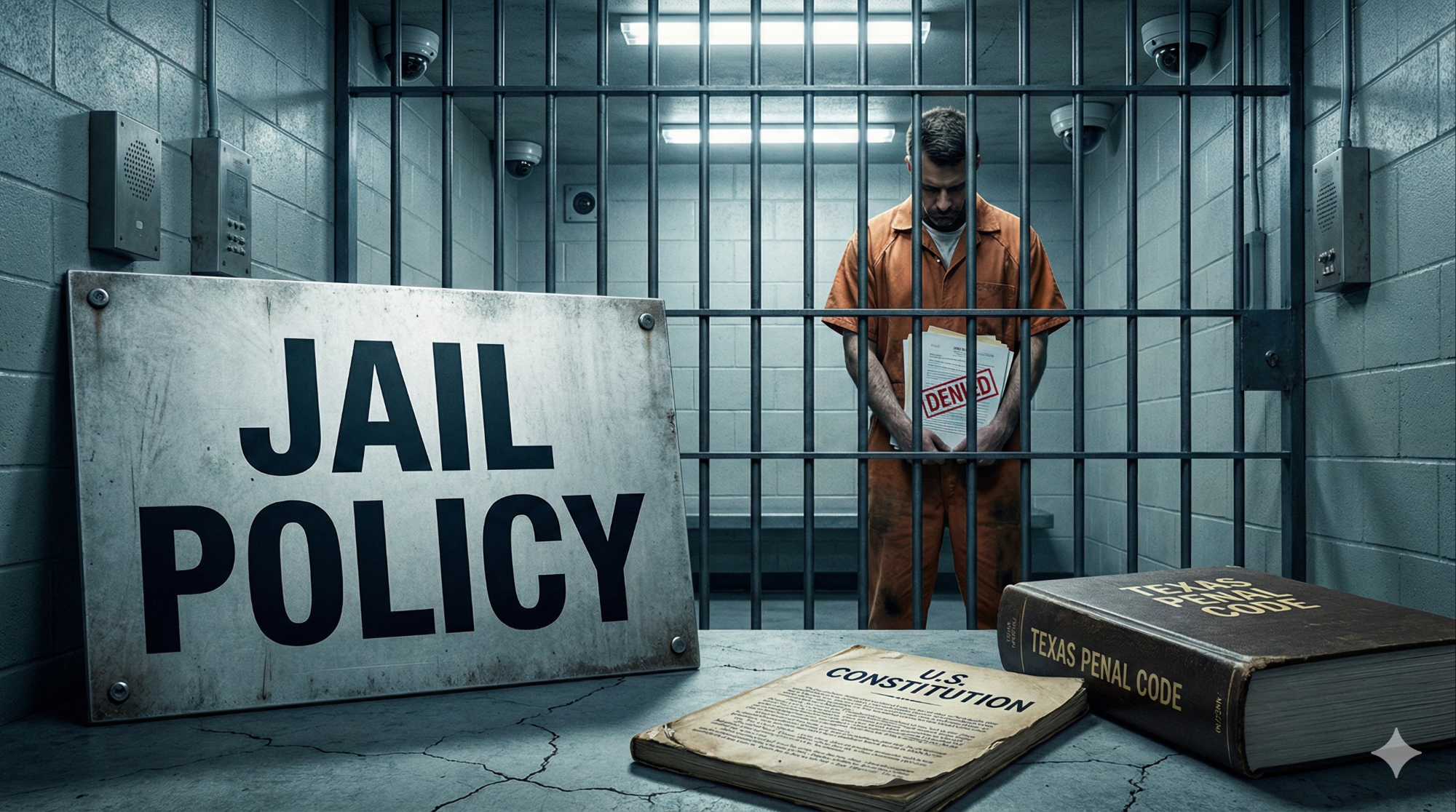
Jail Policy Conflict: When Internal Rules Override Constitutional Rights
Jail policy conflict arises when internal detention rules appear to override constitutional protections guaranteed under state and federal law.
By LeRoy Nellis
Executive Summary
While detained pretrial, I experienced situations where internal jail policy appeared to sidestep constitutional protections. This article examines how administrative systems operate when policy and law intersect.
For related documentation, see the systemic detention timeline and the live evidentiary record.
For legal reference, review Fourteenth Amendment doctrine.
Jail Policy Conflict in Detention Systems
In principle, internal policy exists to implement statutory and constitutional law. In practice, decisions affecting housing, medical access, communication, and classification are often justified solely by internal rules.
The core issue is whether sufficient review mechanisms exist to ensure those policies remain aligned with constitutional requirements.
Pretrial Status and Non-Punitive Standards
Pretrial detainees are entitled to non-punitive conditions. Restrictions must be tied to legitimate objectives—not punishment.
- Extended isolation
- Reclassification without hearing
- Restrictions on communication
Medical Access and Administrative Procedure
Medical care must meet constitutional minimum standards. Delays or improper staffing raise serious legal concerns.
Conclusion
Jail policy conflict defines the boundary between lawful detention and potential constitutional violation.