
By LeRoy Nellis
Austin, Texas
January 2026
Executive Summary
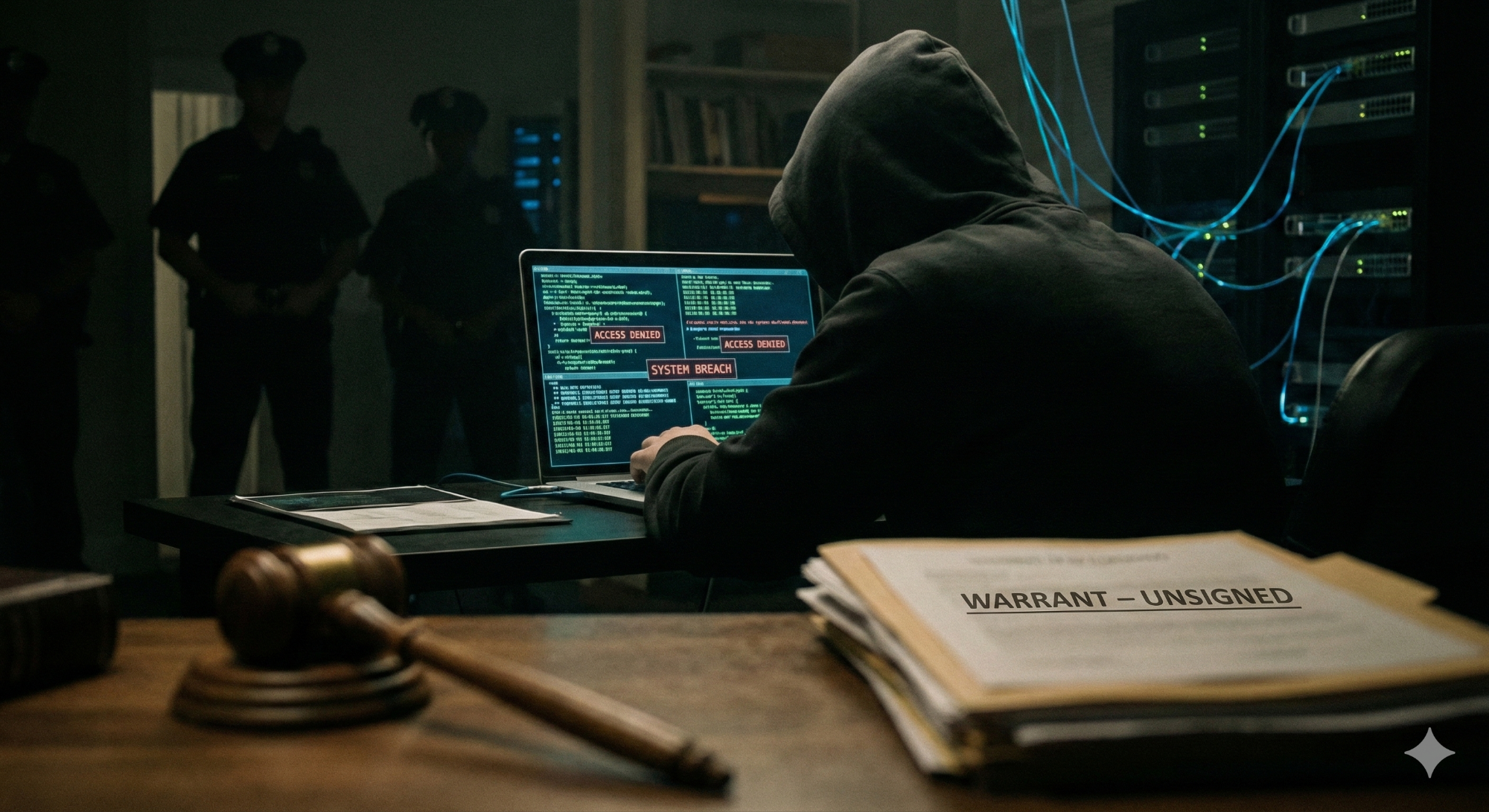
Texas law enforcement agencies are conducting digital surveillance and system access without first obtaining warrants, relying on vendor-controlled platforms, administrative access, and post-hoc legal justification rather than prior judicial authorization.
I know this first hand — because it happened to me.
While agencies publicly describe these practices as “lawful investigations,” the reality reflects access before warrants, parallel construction, and AI-assisted analysis of data that was never lawfully obtained in the first place.
First-Hand Statement of Knowledge
I am not describing a hypothetical risk or abstract concern. I am a former pretrial detainee and private citizen who personally experienced digital account interference, monitoring of communications, and surveillance behaviors without notice or prior judicial authorization.
At no point was I served with a warrant authorizing broad digital access to my systems. The access occurred first. Any legal paperwork came later — or not at all.
The Law Requires Warrants First — Not After
The Fourth Amendment requires prior judicial authorization for searches of digital systems. The U.S. Supreme Court has made clear that digital data receives heightened constitutional protection, including in Riley v. California (2014) and Carpenter v. United States (2018).
Texas law mirrors these requirements. There is no general exception allowing law enforcement to access digital systems first and justify later.
How Warrantless Access Happens in Practice
In practice, access occurs through mechanisms that bypass judicial oversight, including vendor administrative portals, correctional communications platforms, cloud service access, and inter-agency data-sharing agreements.
These methods enable observation, copying, and analysis of data without a judge ever reviewing scope, necessity, or legality.
Parallel Construction and Evidence Laundering
When access occurs without a warrant, agencies frequently rely on parallel construction: investigators access data informally, learn what exists, then later obtain a warrant that conceals the original access path.
This practice undermines due process, discovery obligations, and the exclusionary rule, turning warrants into retroactive paperwork.
AI Multiplies the Constitutional Harm
Artificial intelligence does not defeat encryption; it amplifies unlawful access. Once data is obtained — lawfully or not — AI systems analyze communications at scale, correlate contacts and locations, flag behavior, and retain data indefinitely.
If access is unlawful, AI multiplies the violation instantly.
Attorney-Client Communications and Protected Speech
Warrantless digital ingestion inevitably captures attorney-client communications and protected speech. Federal settlements have already confirmed that correctional communication systems unlawfully recorded privileged calls, yet the same architectures remain deployed.
Oversight Has Failed
Oversight frameworks were designed for physical searches and discrete wiretaps — not continuous digital access, AI surveillance, vendor-owned infrastructure, and cross-agency data federation.
Courts rarely see the full access chain. Regulators lack technical visibility. Citizens are surveilled without notice or remedy.
A Rule-of-Law Crisis
Technology does not override the Constitution. Artificial intelligence does not suspend civil rights. Administrative convenience is not legal authority.
If law enforcement can access digital systems before obtaining warrants, the warrant requirement no longer exists in practice. I know this because it happened to me.
Conclusion
This is not opposition to investigations. It is opposition to unchecked power exercised outside judicial control. Until digital access is returned to real warrant requirements, every citizen is subject to invisible surveillance they cannot see, challenge, or contest.
That is not public safety. That is constitutional failure.
 LeRoy Nellis