

Religious Coercion in Jail: Punished for Refusing to Surrender a Bible
Religious coercion jail describes the use of detention power to punish or pressure individuals for exercising protected religious rights. This account documents how a restraint chair was used after I refused to surrender my Bible inside Williamson County Jail.
By LeRoy Nellis | Austin, Texas
For related documentation, see the systemic detention timeline and the live evidentiary record.
For constitutional context, review First Amendment protections and Fourteenth Amendment due process.
Religious Coercion Jail — Scene: The Procession
This was not a mental health intervention. This was not safety. This was not medical care.
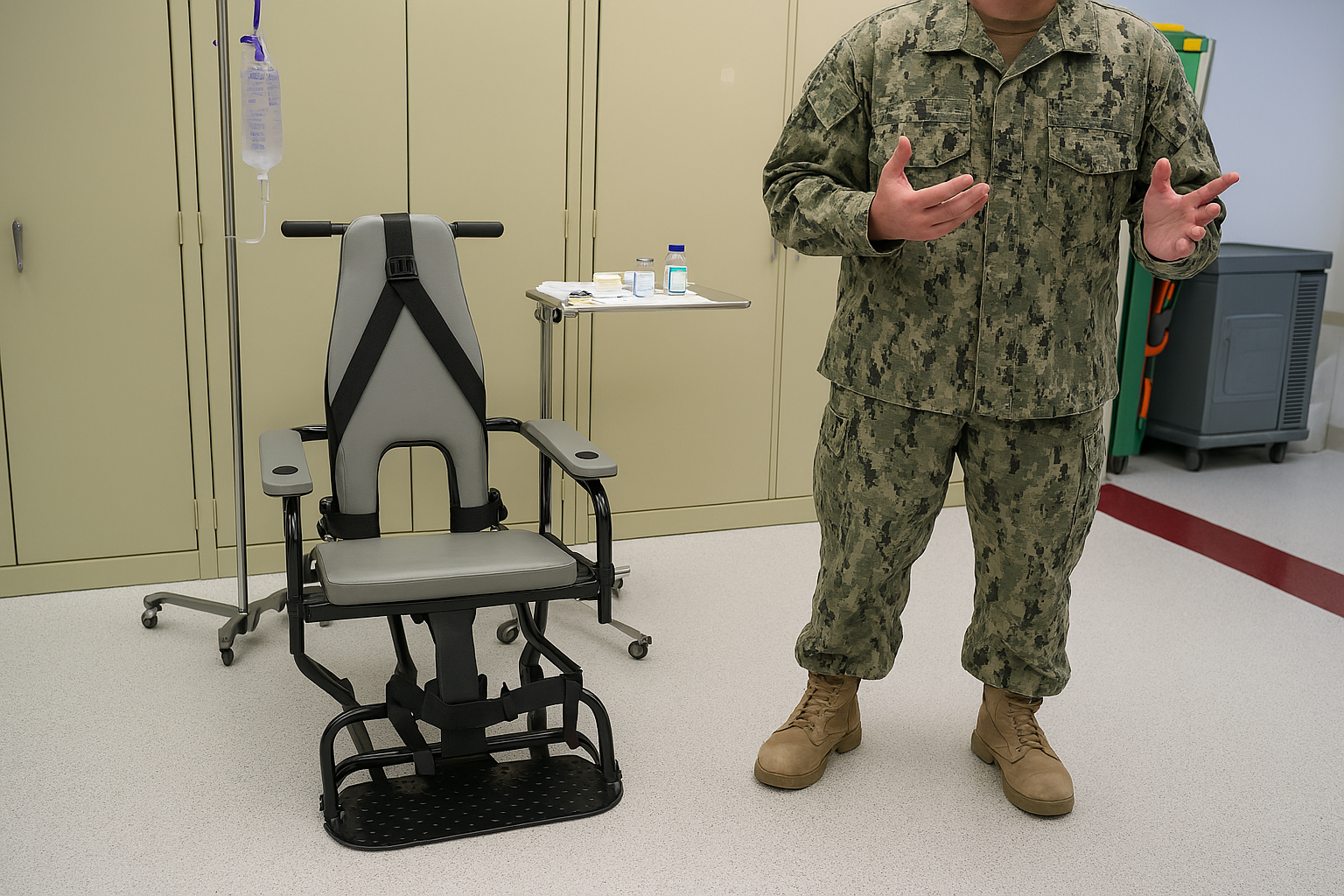
I was placed into a restraint chair because I refused to surrender my Bible.
Two weeks earlier, I had passed an independent forensic psychological examination. I was found competent, stable, and fit to participate in my defense. There was no medical, psychiatric, or behavioral justification for restraints.
The sole triggering event was my refusal to give up my religious materials—my Bible and prayer rug. That refusal, grounded in protected religious exercise, was treated as defiance.
Inside Williamson County Jail, religious defiance was met with punishment.
I was placed in a suicide-prevention smock—an identity-stripping garment justified as “safety.” Then they brought the restraint chair.
The chair had wheels. They strapped me in tightly—wrists cinched until circulation failed—and wheeled me through the jail. Down hallways. Past cells. Past staff. Past detainees.
This was not transport. It was a procession.
I was taken to intake and left there for approximately two and a half hours. Immobilized. No medical monitoring. No evaluation. No legal justification.
I was not being treated. I was being displayed.
The message was unmistakable: refusal to surrender religious materials would be broken publicly.
This was a deliberate use of mechanical restraint in direct response to protected religious exercise.
Systemic Implications
This instance of religious coercion jail conduct reflects a broader structural issue: the use of force under administrative authority without licensed medical oversight or constitutional justification.
Records from the Texas Medical Board indicate that individuals making these decisions were not licensed medical providers. Yet restraint was applied under the pretext of safety.
When unlicensed personnel deploy restraint devices in response to religious conduct, the issue is no longer policy—it is constitutional violation.
Conclusion
The restraint chair was not a safety device. It was a coercive tool used to suppress protected rights.
Religious exercise is not optional. And detention does not eliminate constitutional protections.