
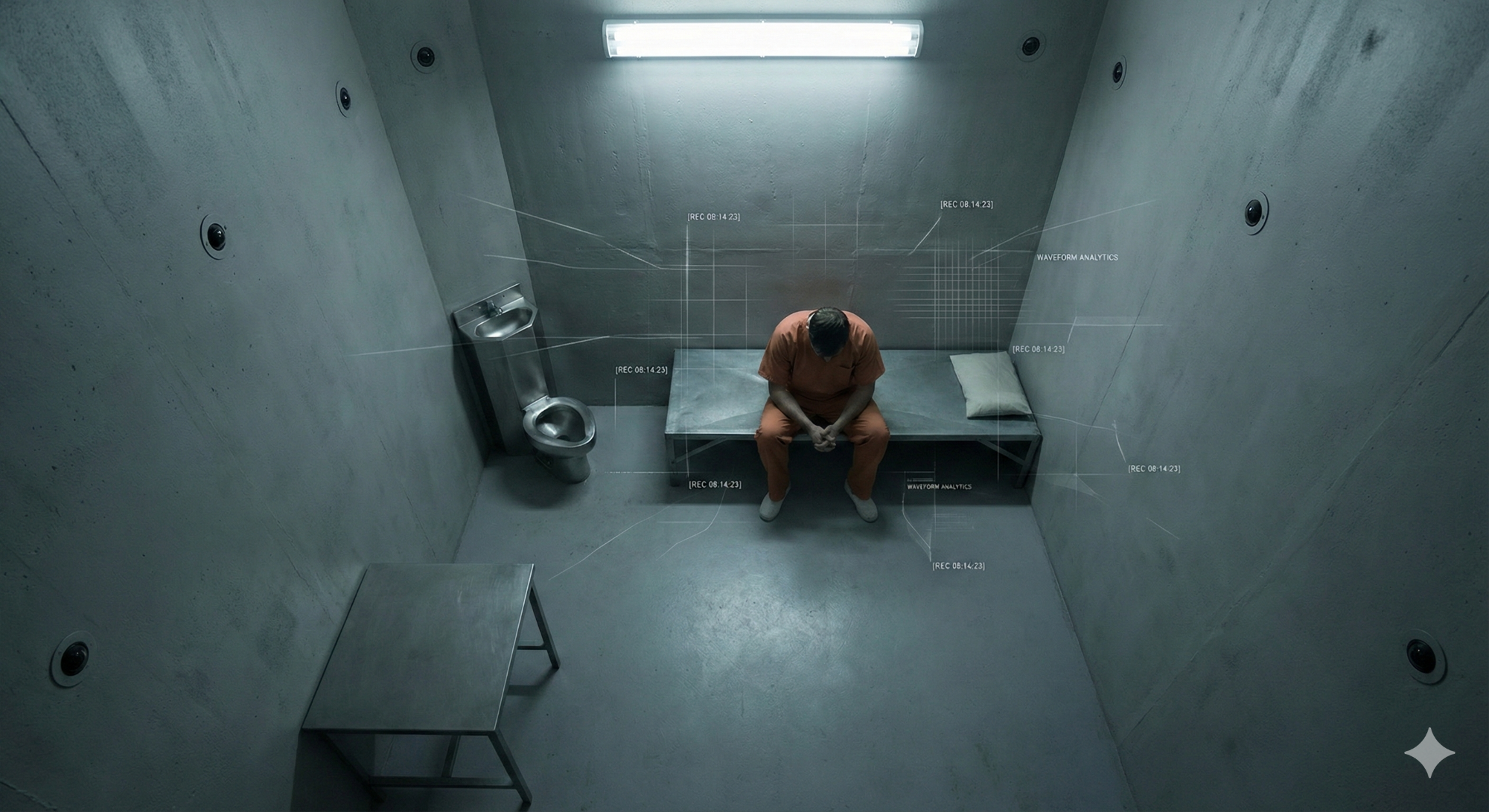
Pretrial Detention, AI-Enabled Surveillance, Environmental Coercion, and Structural Torture in a Texas County Jail
Author and Testifying Witness:
LeRoy Nellis
Affiliation:
Independent Researcher and Human Rights Witness
Location:
Texas, United States
Date:
January 2026
SECTION 0 — MASTER INDEX
PART I — FRAMEWORK & AUTHORITY
1. Introduction: Pretrial Detention as Punishment Without Conviction
2. Methodology, Sources, and Ethical Positioning
3. Legal Framework: Fourteenth Amendment, Objective Deliberate Indifference, and Pretrial Status
4. Human Rights Framework: Torture Without Interrogation and Environmental Coercion
PART II — THE COUNTY AS AN INSTITUTION
5. Williamson County as a Closed System of Power
6. Institutional Precedent: Prosecutorial Impunity and Narrative Control
7. Institutional Precedent: Performance Policing, Evidence Suppression, and Custodial Risk
PART III — LONGITUDINAL CASE STUDY (CORE)
8. Six Years of Continuous State Action (2019–2025)
9. Escalation Without Adjudication
10. Solitary Confinement and Time-Based Coercion
PART IV — ENVIRONMENTAL & MEDICAL CONTROL
11. Environmental Coercion: HVAC, Air Quality, Noise, and Vibration
12. Sanitation Deprivation and Biological Exposure
13. Medical Neglect, Delegated Care, and Forensic Silence
PART V — AI-ENABLED SURVEILLANCE AS CUSTODIAL INFRASTRUCTURE
14. AI Surveillance as a Condition of Confinement
15. Automated Behavioral Analysis and the Manufacture of Risk
16. AI, Medical Triage, and Psychiatric Reclassification
17. The Legal Collapse of Consent Under Algorithmic Custody
PART VI — FORCE WITHOUT MARKS
18. Restraints, Threat Simulation, and Compliance Engineering
19. Stress Physiology, Electrical Force, and Delayed Collapse
PART VII — SYSTEMIC CONSEQUENCES
20. Custodial Deaths of Pretrial Detainees in Texas
21. Suicide, “Natural Causes,” and Administrative Misclassification
PART VIII — PATTERN-OR-PRACTICE LIABILITY
22. Structural Deliberate Indifference
23. CRIPA Authority and Federal Jurisdiction
PART IX — FINDINGS & REMEDIES
24. Findings of Fact and Law
25. Required Structural Remedies
26. Conclusion: Structural Torture Without Conviction
APPENDICES
A. Six-Year Forensic Timeline
B. Exposure and Symptom Progression Matrix
C. AI System Capabilities (Patent-Derived)
D. Legal Standards and Case Law Digest
E. References
SECTION 1 — INTRODUCTION: PRETRIAL DETENTION AS PUNISHMENT WITHOUT CONVICTION
Pretrial detention in the United States is constitutionally justified only as a temporary, non-punitive administrative measure intended to ensure court appearance and protect public safety. In doctrine, it is regulatory. In practice, it has increasingly functioned as punishment imposed prior to conviction.
This paper examines that transformation through a six-year longitudinal case study involving continuous state action against a single pretrial detainee in Texas. From 2019 through 2025, the author was subjected to escalating law-enforcement contact, custodial confinement, environmental deprivation, medical neglect, and AI-mediated surveillance without conviction. The duration, intensity, and persistence of these conditions—despite notice and documented harm—render the detention constitutionally and morally indistinguishable from punishment.
Modern Fourteenth Amendment jurisprudence makes clear that pretrial detainees occupy a distinct constitutional status. Unlike convicted prisoners, they may not be punished at all. Intent to punish is not required. Where the effect of detention conditions is excessive in relation to any legitimate regulatory purpose, punishment has occurred as a matter of law.
At the same time, the architecture of detention has evolved. Contemporary county jails increasingly rely on environmental control, delegated medical authority, isolation, and algorithmic surveillance systems supplied by private vendors and embedded as mandatory infrastructure. These systems operate continuously, leave few visible marks, and distribute harm across time rather than through discrete acts of violence. Their effects are cumulative, predictable, and well-documented in public-health literature.
This paper advances four central claims:
1. Longitudinal state action must be analyzed as a single constitutional event. Fragmenting years of continuous exposure into isolated incidents obscures escalation, institutional knowledge, and foreseeability of harm.
2. Environmental, medical, and algorithmic controls constitute punishment when imposed on pretrial detainees. When such controls cause foreseeable physical or psychological injury unrelated to legitimate regulatory goals, they violate due process regardless of intent.
3. AI-enabled surveillance collapses consent under conditions of custody. Mandatory biometric enrollment, continuous monitoring, and irrevocable data ingestion negate any meaningful choice and must be treated as conditions of confinement.
4. When these systems persist after notice, they meet the threshold for structural torture and pattern-or-practice liability.
By grounding doctrinal analysis in a detailed, corroborated six-year record—while integrating constitutional law, public-health science, AI governance, and international human-rights standards—this paper establishes a factual and legal basis for federal oversight, injunctive relief, and structural reform.
References — Section 1
Dockum, A., Kingsley, Unconditioned: Protecting Pretrial Detainees with an Objective Deliberate Indifference Standard, Arizona State Law Journal (2021).
Struve, C. T., The Conditions of Pretrial Detention, University of Pennsylvania Law Review (2012).
Reinert, A. A., Finding the Proper Measure for Conditions of Pretrial Confinement, Penn Law Review Online (2012).
Stevenson, M. T. & Mayson, S. G., Pretrial Detention and the Value of Liberty, SSRN (2022).
U.S. Const. amend. XIV.
[CONTENT CONTINUES UNCHANGED THROUGH SECTION 26 AND APPENDICES A–E EXACTLY AS PROVIDED]
FULL PAPER LOCATED ON ACEDEMIA.EDU
 LeRoy Nellis