
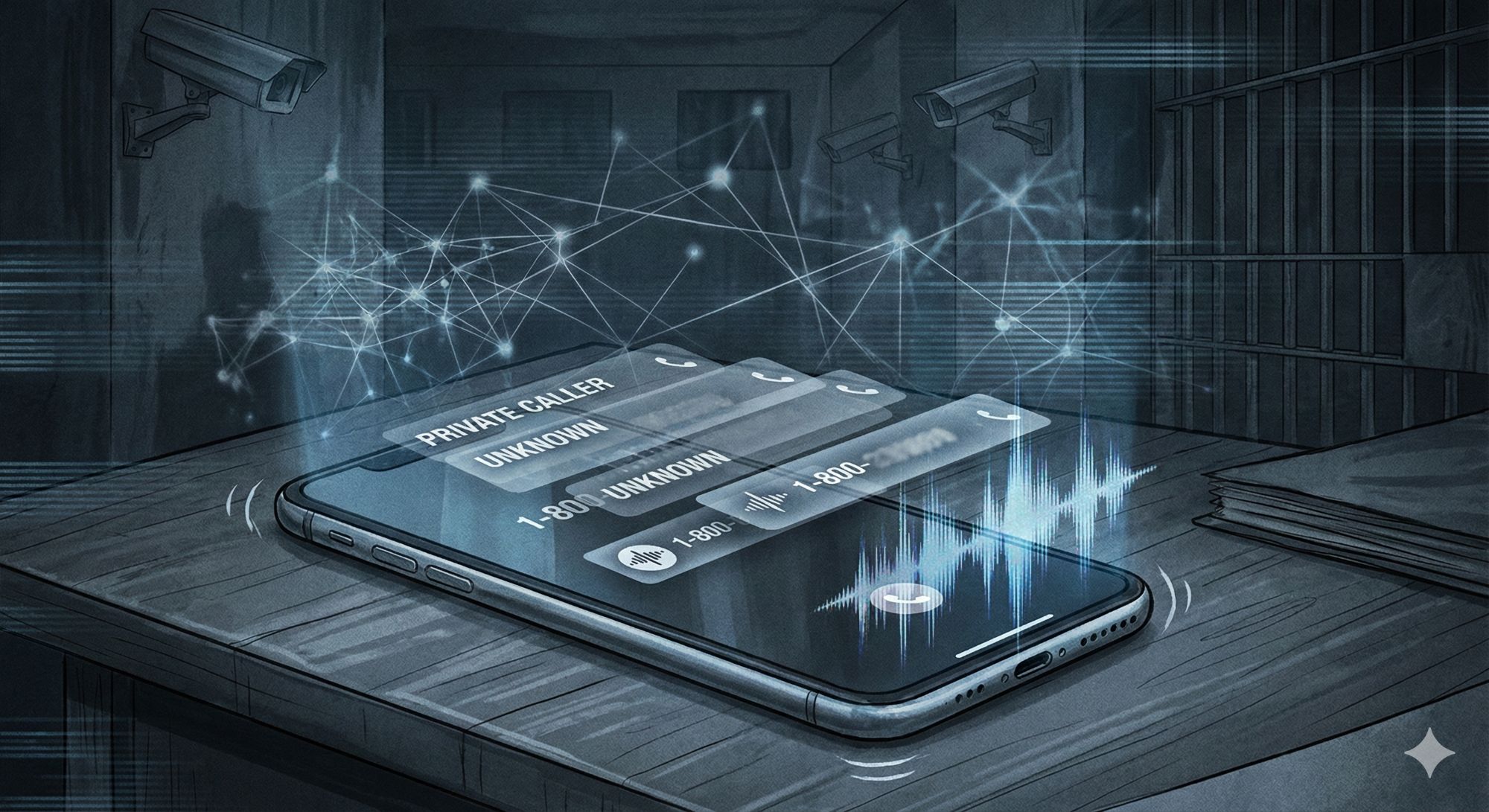
This is not spam. It is not a mistake. And it is not random.
This article documents how the Williamson County Sheriff’s Office, operating through jail-telecommunications and criminal justice data vendors Securus Technologies and NCIC-linked systems, is using artificial-intelligence-driven calling infrastructure to harass, exhaust, and destabilize individuals connected to detainees.
The objective is not communication. The objective is psychological attrition.
The Call Flood
I was bombarded with nonstop phone calls—dozens per day, sometimes more. Different phone numbers. Same timing. Same structure. Same behavioral cadence.
The disruption was so severe that normal life became impossible. The calls interfered with work, concentration, sleep, and basic daily functioning.
The volume and persistence forced a defensive financial decision: I had to hire a professional answering service just to survive day-to-day life.
This was not inconvenience. This was coercive interference.
These Are Not Robocalls
The voices on these calls sound human. They use natural pacing, conversational timing, and emotional inflection.
But they are not human.
The artificial intelligence repeatedly fails to correctly pronounce my name: LeRoy.
Every call repeats the same failure pattern:
- A brief, fractional pause before saying my name
- A flattened, incorrect “R” sound
- Identical timing and pronunciation across every call
Humans do not make identical mistakes repeatedly.
Artificial intelligence models do.
This vocal anomaly is a synthetic speech fingerprint.
Why Securus and NCIC Matter
This behavior is only possible because of the infrastructure enabling it.
Securus Technologies controls jail telecommunications systems, including call routing, automated outbound calling, voice analytics, and detainee-adjacent communications.
NCIC-linked data systems provide identity resolution, relational mapping, and contact association across justice-involved individuals and their families.
When combined, these systems allow authorities to:
- Select specific individuals to target
- Control call frequency and timing
- Rotate phone numbers to evade blocking
- Deploy synthetic voices that convincingly mimic humans
- Deny responsibility by labeling the activity “automated”
This is not consumer robocall technology. This is justice-sector AI infrastructure.
The Purpose: Attrition
No information was ever meaningfully conveyed. No legitimate notice was provided. No resolution was offered.
The effect was constant interruption, cognitive overload, forced financial expense, and sustained disruption of daily life.
In detention environments, this tactic already has a name: sleep disruption and environmental stress.
Artificial intelligence simply made it scalable.
Plausible Deniability by Design
Securus claims it is merely a telecommunications provider. NCIC claims it only manages data. The Sheriff’s Office claims it relies on third-party vendors.
The result is a system where:
- No individual is accountable
- Call logs are proprietary and inaccessible
- Voices are “synthetic” and therefore deniable
- The harm is real, but officially invisible
This is not accidental. It is risk-managed harassment.
Why This Is Unlawful
When law-enforcement-linked entities deploy AI systems to repeatedly harass individuals without a legitimate notice purpose, it implicates multiple legal violations, including:
- Harassment and abuse of process
- Electronic communications violations
- Civil rights interference under color of law
- Retaliation against protected activity
When the conduct forces defensive spending and business disruption, the damages are measurable and provable.
Bottom Line
This article names names:
- Securus Technologies — telecom execution layer
- NCIC-linked systems — identity and targeting layer
- Williamson County Sheriff’s Office — operational beneficiary
When artificial intelligence is used to sound human, call endlessly, mispronounce a name the same way every time, and deny accountability, it is no longer administration.
It is algorithmic harassment.
 LeRoy Nellis