
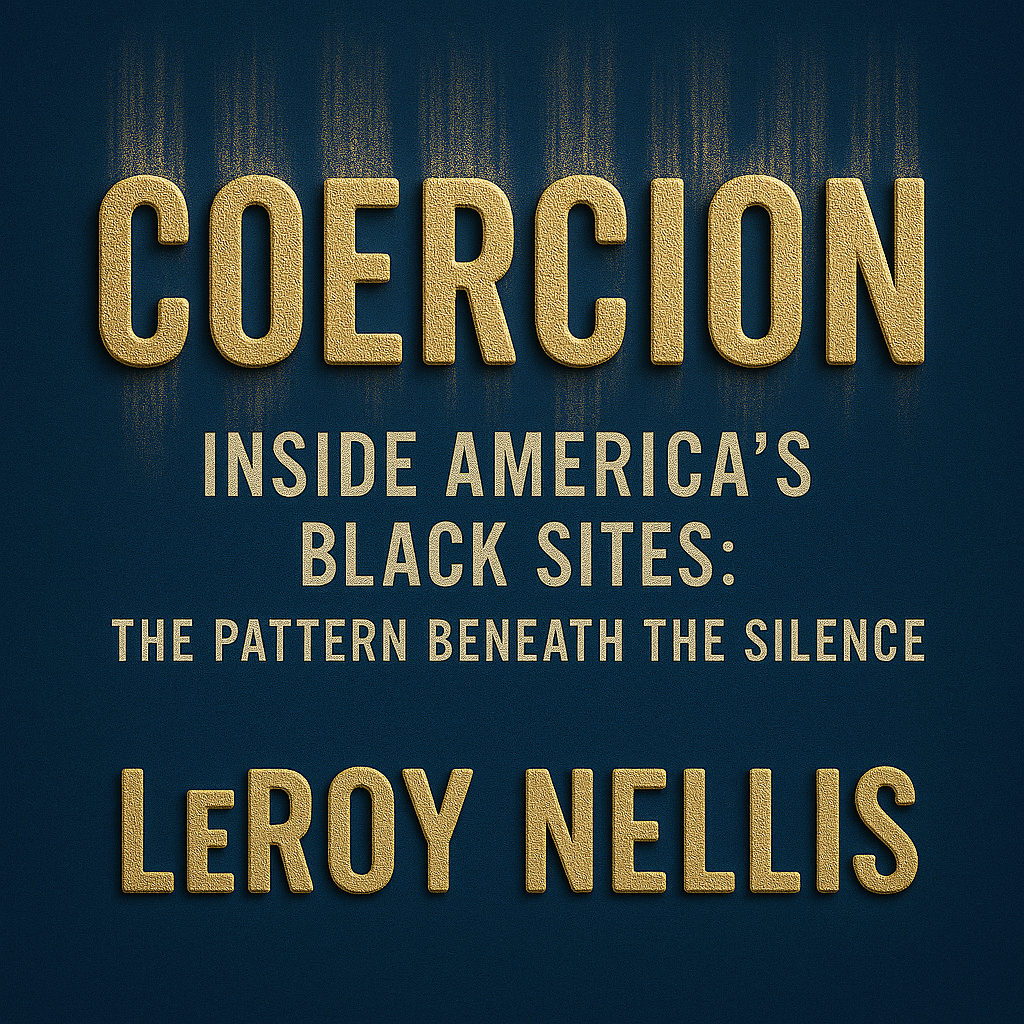
White Sites and IGSA’s EXPOSED
By LeRoy Nellis, Investigative Contributor
In the shadowy corridors of American law enforcement, few agencies operate with the quiet reach and authority of the U.S. Marshals Service. Tasked with apprehending fugitives, transporting federal prisoners, and protecting the judiciary, the Marshals often serve as the connective tissue between federal, state, and even international operations. But what happens when someone is arrested by the Marshals and held in a county jail? And how long can the federal government detain someone without filing charges?
Arrested by the Marshals, Held by the County
Contrary to popular belief, federal detainees aren’t always held in sleek, high-security federal facilities. In fact, many are housed in county jails under intergovernmental agreements, especially when federal space is limited or when detainees are awaiting trial. These individuals may be arrested by the U.S. Marshals but held in local facilities—sometimes alongside state detainees facing similar charges.
This overlap raises a legal curiosity: Can someone be held on the same charges by both federal and state authorities at the same time? The answer is yes. Under the doctrine of dual sovereignty, both federal and state governments can prosecute a person for the same conduct if it violates laws in both jurisdictions. It’s a legal tightrope that defense attorneys watch closely.
The Clock Is Ticking: Federal Detention Limits
Once a person is arrested by federal authorities, the Speedy Trial Act kicks in. Under 18 U.S. Code § 3161(b), the government has 30 days to file formal charges—either by indictment or information. If no grand jury is in session during that time, the deadline can be extended to 60 days. Failure to meet these deadlines can result in dismissal of the case, though prosecutors may refile later.
But the law also allows for “excludable delays”—time that doesn’t count toward the deadline. These include:
- Pretrial motions
- Competency evaluations
- Witness unavailability
- Continuances granted for the “ends of justice”
These delays, while legal, can stretch detention timelines and raise questions about due process—especially for detainees held in county jails under federal authority.
Behind the Scenes: Marshals, the CIA, and the Military
Though the Marshals Service is a domestic law enforcement agency under the Department of Justice, its reach occasionally intersects with the CIA and the U.S. military. These collaborations are rare but real, especially in cases involving:
- International fugitives
- Counterterrorism operations
- High-risk extraditions
- Witness protection for military or intelligence personnel
Joint task forces—often involving the FBI, DEA, CIA, DoD, and local law enforcement—serve as the operational backbone for these missions. Intelligence sharing is key, though the CIA is legally barred from domestic law enforcement under the National Security Act of 1947. Any cooperation must respect constitutional boundaries and oversight mechanisms.
In some cases, Marshals may support military tribunals or provide security for detainees with national security implications. The CIA’s Office of Military Affairs coordinates with the Department of Defense, and while the Marshals aren’t embedded in these structures, they may be called upon when federal custody intersects with military or intelligence priorities.
The Thin Line Between Jurisdiction and Justice
The U.S. Marshals Service operates at the intersection of law, logistics, and secrecy. Whether holding detainees in county jails or collaborating with the CIA on international manhunts, the agency’s role is both expansive and tightly regulated. For detainees, the difference between federal and local custody can mean everything—from legal strategy to the conditions of confinement.
As America continues to grapple with questions of transparency, due process, and interagency power, the Marshals remain a quiet force—moving prisoners, protecting judges, and sometimes, working in the shadows of the intelligence world.
White Sites and IGCA’s EXPOSED
“I Don’t Lose!” Fighting for Justice for all…
© 2025-2026 Hidden White Sites in America - IGA Sites EXPOSED. All rights reserved.

The content, design, and functionality of this website—including but not limited to text, graphics, logos, images, audio, video, and code—are the intellectual property of [Website Name] and are protected by applicable copyright, trademark, and other intellectual property laws.

No part of this website may be reproduced, distributed, or transmitted in any form or by any means without prior permission, including photocopying, recording, or other electronic or mechanical methods, without the prior written permission of the copyright owner, except in the case of brief quotations embodied in critical reviews and certain other non-commercial uses permitted by copyright law.

Unauthorized use of any materials from this site may violate copyright laws and result in legal action.

For permissions or inquiries, please contact: LeRoyNellis2@Gmail.com
 LeRoy Nellis