What a fusion center really is — and where the two in the Austin area sit
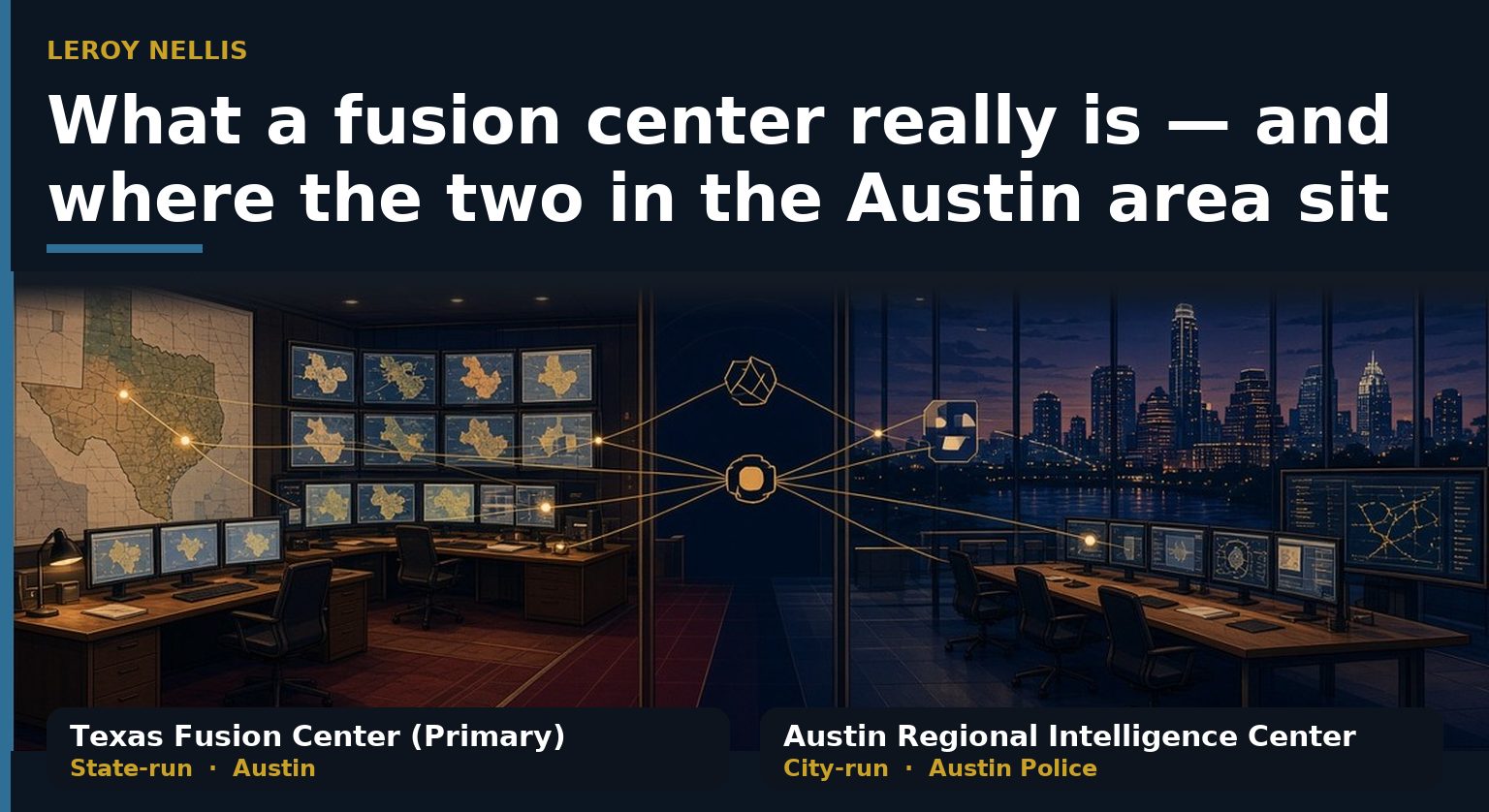
A fusion center bundles law-enforcement sharing under one roof, and Texas has a national name for them: two of the recognized hubs operate in the Austin area, run by the state and by the city.
Imagine every patrol report, tip, and threat bulletin in a county racing to a single desk. That's the whole concept. A fusion center is a shared room, and Homeland Security's network puts about eighty of them across the country; Texas is one of the participating states.
The desk that serves the state
The Texas Fusion Center is the state's listing and home, sitting in Austin. It's not a county's arm at all — it's the state hub — and it is the primary contact the national directory gives for the region. You'll see its numbers printed online: 512-424-7981 and the nationwide 866-786-5972 line.
When a threat comes in from any county in the state, the center may pass it up to federal partners first and back to local responders next. The Williamson County Sheriff, like any other county, feeds that channel when its cases touch it.
The desk beside it: Austin's own center
The second hub in the area is the Austin Regional Intelligence Center, recognized by DHS as a fusion center, led by Austin Police. Austin police describe it as a centralized, multi-agency criminal information stream — the police department staffs it as lead. Its public phone is 512-974-2742.
Community groups have pushed against ARIC's surveillance footprint for years; families and advocacy groups say the tool's footprint harms vulnerable residents, and those complaints sit in the public record beside the police department's stated purpose.
The cast of agencies
These hubs usually seat a federal bench: the FBI's central threat analysis; ICE's HSI (immigration and worksite investigations); the U.S. Marshals Service (fugitives). Around them are county sheriffs, city departments, and state agencies sending and receiving the tips — which is why so many agencies touch the same county cases.
How to verify any of this
Start at the evidentiary record, then the DHS directory, where both centers are named. Then read the police department's own ARIC overview and the critics' statements side by side. No one section explains the system; all three do.
Sources: DHS, "Fusion Center Locations and Contact Information" (2026-09-04), showing Texas Fusion Center (Primary) and Austin Regional Intelligence Center; Austin Police Department, ARIC overview; Texas DPS, "Texas Fusion Center"; Grassroots Leadership 2021 press statement on ARIC; federal partner roles from the national fusion-center model as described by DHS.